

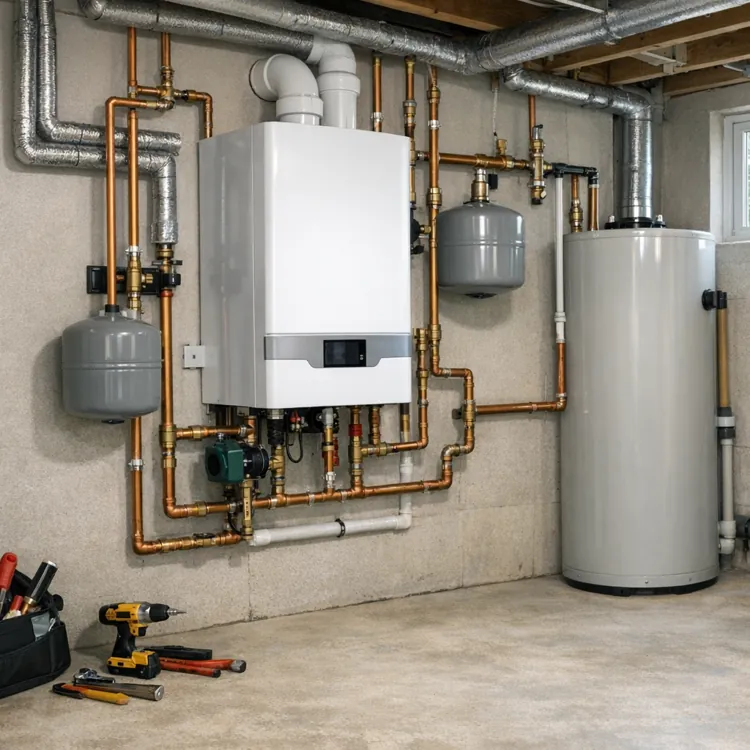

A boiler rarely fails at a convenient moment. It tends to give up on the coldest night of the year, leaving you with a chilly house and a big decision to make quickly. Knowing what drives the price of a new system helps you plan ahead, compare quotes with confidence and avoid paying for things you do not need.
What Does a New Boiler Typically Cost?
For most homeowners planning boiler replacement in Cedar Rapids, IA, a realistic budget is roughly $4,000 to $10,000 installed. Larger homes, high-efficiency models and complicated installations can push the total higher. Your final figure depends on several factors, so treat any national average as a starting point rather than a promise.
Key Factors That Shape the Price
Boiler Type and Fuel
Most homes in the area use natural gas, which is generally the most affordable fuel to run. Oil, propane and electric boilers each come with different equipment and running costs. Switching fuel type, for example from oil to gas, can add expense because of new connections, venting or tank removal.
Efficiency Rating
Efficiency is measured as AFUE (Annual Fuel Utilisation Efficiency). Standard boilers are typically around 80–85% efficient, while condensing models can reach 90–98%. A high-efficiency boiler costs more upfront, but it wastes less fuel, which matters during Iowa’s long heating season.
Size and Heat Load
Bigger is not better. An oversized boiler cycles on and off too often, wasting energy and wearing out sooner. An undersized one struggles to keep your home warm. A reputable installer will calculate your home’s heat load rather than simply matching the old unit.
Installation Complexity
Labour often accounts for a large share of the bill. Costs rise if the installer needs to:
● Replace or reroute pipework and flues
● Upgrade a chimney liner for a condensing unit
● Remove old equipment, such as a heavy cast-iron boiler
● Add a condensate drain or new controls
Timing and Urgency
Emergency replacements in midwinter leave little room to compare options. Installers are busiest then, and you may have to accept whatever is in stock. Replacing in spring or summer gives you time to shop around.
How to Keep Costs Sensible
● Get at least three written quotes. Make sure each covers the same equipment, labour, removal and warranty so you can compare fairly.
● Check credentials. Ask for proof of licensing and insurance, and read recent customer reviews.
● Look beyond the headline price. A cheaper boiler with poor efficiency can cost more over its lifetime.
● Ask about rebates. Utility companies and manufacturers sometimes offer incentives, but they change often, so confirm current details before you commit.
● Plan ahead. If your boiler is over 15 years old, needs frequent repairs or has rising energy bills, start researching before it fails.
Signs It May Be Time to Replace
Repair may no longer be worthwhile if you notice any of these:
● Repeated breakdowns or costly repairs
● Uneven heating or strange banging and whistling noises
● Rust, leaks or visible corrosion
● Fuel bills climbing without a change in usage
Frequently Asked Questions
How long does a boiler last?
Most last 15 to 20 years, and well-maintained cast-iron models can last longer. Annual servicing helps extend a boiler’s life.
How long does installation take?
A straightforward swap usually takes one to two days. Fuel changes or pipework alterations can take longer.
Is a high-efficiency boiler worth it?
Often, yes. Higher upfront costs can be offset by lower fuel bills, especially in a cold climate, though payback depends on your usage and home.
Should I repair or replace?
As a rough guide, if a repair costs more than half the price of a new unit and your boiler is ageing, replacement usually makes better financial sense.
Conclusion
The cost of a new boiler depends on fuel type, efficiency, correct sizing, installation work and timing. Plan early, compare detailed written quotes and weigh long-term running costs against the upfront price. A properly sized, professionally installed boiler will keep your home warm and comfortable for many winters to come.